
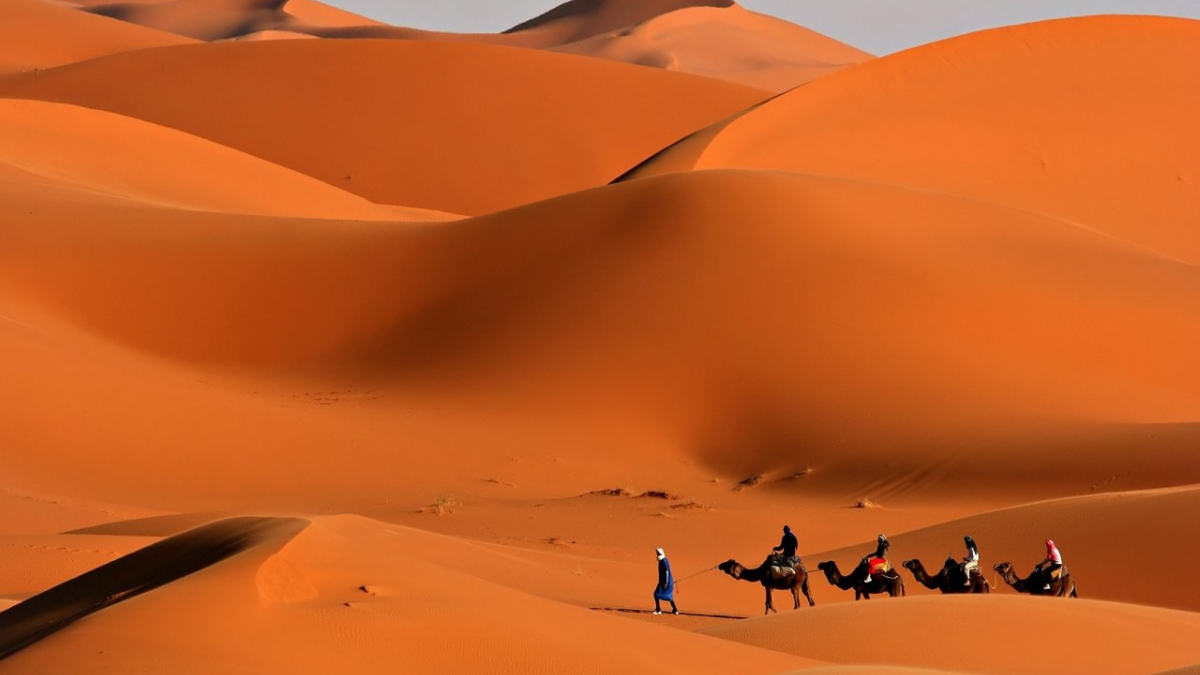
A caravan in the dunes is a beautiful sight. A little history changes it: the line of animals begins to suggest journeys made for trade, provisions and survival, long before sunset excursions. Near Rissani, the remains of Sijilmassa offer a way to connect the landscape with that older story.
Start with the idea of a city at a crossroads
The French Ministry of Culture places Sijilmassa in the Tafilalt oasis beside Rissani and describes its medieval role linking the Maghreb and the Sahel. That small piece of context changes the visit: the desert becomes a network of connections rather than an empty margin on a map.
Before going, ask your guide to explain three things in plain language: why the settlement was here, how an oasis supported travel and what can actually be identified at the site today. You do not need a lecture full of dates to appreciate the relationship between a city, its resources and distant routes.
Expect traces, not a complete stage set
The word ‘lost’ can encourage the wrong picture. Do not arrive expecting intact streets, furnished rooms or a reconstructed caravan scene. Archaeological remains ask you to look more slowly. A low feature that seems unremarkable at first can become interesting when someone explains what is known and what is still uncertain.
Choose a guide willing to make that distinction. ‘We do not know’ can be a more trustworthy answer than a vivid story with no evidence. If you enjoy places whose meaning needs interpretation, the stop may be rewarding. If you mainly want a grand, immediately legible monument, tell us so when planning.
Give history a place beside present-day Rissani
Pairing the historical stop with Rissani can make a balanced outing, provided the schedule allows both properly. Keep the two experiences distinct: one asks you to imagine an earlier urban landscape; the other is a present-day town where people are shopping, working and moving through their day.
Leave room for a drink, lunch or conversation rather than rushing from a ruin to a market entrance for one photograph. Ask before taking portraits. A visit feels richer when the guide introduces context and lets you observe, instead of describing every ordinary interaction as a scene from the past.
Check access before building the day around it
Archaeological access can change because of protection measures, works or local arrangements. Confirm what is currently accessible, whether accompaniment is needed and where the vehicle can stop. We do not publish an unverified opening hour, entrance price or promise of access to an excavation.
Wear shoes suitable for uneven ground, bring water and sun protection, and follow any boundaries. Leave fragments and stones where they are. Collecting something small removes it from its context; a photograph and a clear explanation are better souvenirs of an archaeological visit.
Do not sacrifice the desert arrival to add one more stop
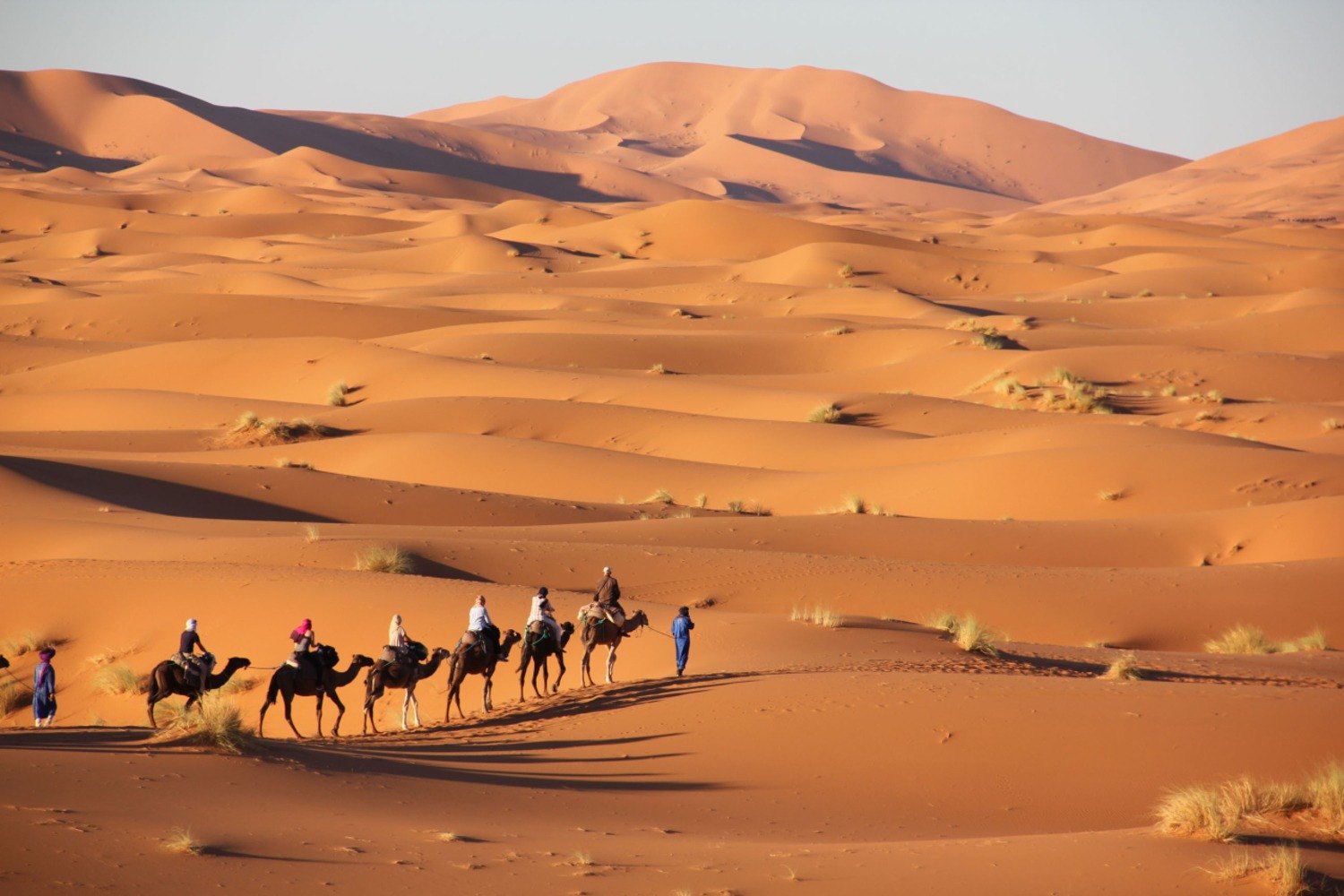
If you are approaching from another city, consider the visit as part of the road day only when the available time is comfortable. Protect meals, rest and the confirmed Merzouga meeting time. A cultural stop loses its appeal if everyone is watching the clock because the camel departure is approaching.
A longer stay may allow a separate Rissani outing instead. The published two-night camp program already has a full discovery day, so Sijilmassa needs an explicit adjustment or an additional slot. Ask what would move, what would remain and whether guiding or transport changes the price.
Bring the story back to the evening
Later, as the light softens across Erg Chebbi, you have another way to see the scene. The palms, settlement and roads are no longer merely the approach to a tent. They belong to a region where landscapes and human movement have long shaped each other.
For background, the Moroccan National Tourist Office’s regional heritage guide also identifies Sijilmassa among the area’s historical remains. Read a little, then give the actual visit time to breathe. A good private journey leaves you with a connection, not just another name on a completed list.
Related planning guides
Plan your private desert stay
Tell us your dates, route and interest in history. Request a program and price showing whether Sijilmassa and Rissani can fit comfortably around your Merzouga stay.
Frequently asked questions
Where is Sijilmassa in relation to a Merzouga trip?
Its remains are near Rissani in the Tafilalt region, making it a possible cultural addition when routing and access allow.
Is it a fully preserved ancient city?
No. Go for archaeological traces and historical interpretation rather than a complete reconstructed city.
Is the visit automatically included in the camp package?
No. Request it specifically and confirm timing, access, guiding and any additional cost.
Can we combine it with the Rissani market?
Potentially. Ask for a realistic plan that respects local access, market activity and your Merzouga arrival time.